There’s something electric about live sports — the music, the lights, the anticipation as the crowd settles in and the players take the court. For many, that energy is invigorating and exciting. For others, especially neurodivergent individuals, that same electricity can feel overwhelming without the right preparation and expectations.
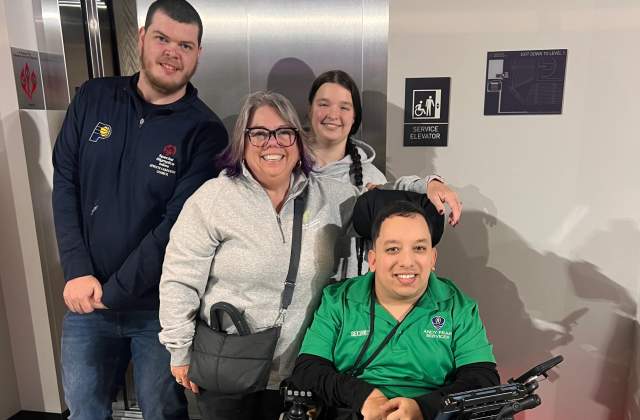
When Brooke, Ryan, Noah and I secured first-row tickets to see the Noblesville Boom in action at The Arena at Innovation Mile, we didn’t simply show up hoping for the best. We showed up with a plan. We wanted the joy of a live sporting event, but we also wanted to understand the space well enough to make it accessible and successful for everyone in our group.
What we found was a venue that, while loud and energetic, has clearly made intentional efforts toward inclusion.
Getting There & Parking
Back to Top of ListStarting Calm Matters
One of the most important pieces of any outing for neurodivergent families is the arrival process. If the first fifteen minutes are chaotic, it can set a tone that is hard to recover from.
Fortunately, getting to The Arena at Innovation Mile was refreshingly simple. The roads leading into the district are clearly marked, and signage directs you efficiently to the parking garage. There was no circling the block, no last-second decision-making and no confusing intersections.
The handicap-accessible drop-off zone is front and center and clearly designated, with traffic directed straight toward the main entrance. That visibility and clarity eliminate unnecessary anxiety.
Parking itself was efficient and surprisingly affordable at just $7 for the entire vehicle. The garage is covered, which turned out to be a gift on the rainy and snowy evening we attended. Being able to park under cover and walk mostly protected from the weather reduced both physical discomfort and sensory overload before we even stepped inside.
Those details matter more than people realize.
First Impressions
Back to Top of ListFamiliarity Reduces Anxiety
The building itself is visually striking. As we approached, the exterior featured large-scale photos and action-shot video displays of Boom players. The presentation carries a big-city sports feel, and it builds excitement naturally as you walk toward the doors.
During the short wait to park, we pulled out our phones and looked up player names. We read quick bios, scanned stats and learned where a few players had previously played. That small act of preparation made a meaningful difference.
Instead of walking into a loud, unfamiliar space, we entered already feeling connected. We knew who we were watching. We had context.
For neurodivergent individuals, predictability and familiarity reduce anxiety. When faces have names and stories, the environment feels less chaotic and more structured.
By the time we entered, we weren’t bracing ourselves. We were ready.
Entry & Security
Back to Top of ListKnow the Rules Ahead of Time
Entry is straightforward through the main front doors — the same location as the accessible drop-off. Each guest passes through a metal detector and bags are searched if carried.
The process was efficient and clearly communicated. There were no surprise changes or unclear instructions.
However, it is important to review the Boom’s bag policy before arriving. Outside food and beverages are not permitted, including refillable water bottles. For those who rely on specific comfort items, knowing this ahead of time allows for mental preparation and alternative planning.
Eliminating unexpected friction at the entrance sets a calmer tone for the rest of the evening.
Grand Hall
Back to Top of ListHigh Energy & Sensory Load
Grand Hall is visually impressive and high-energy. Tall ceilings, bright digital screens, booming music, crowd noise, and constant movement create a layered sensory experience.
It feels professional. It feels exciting.
It also feels intense.
Sound does not drop off for long stretches. Music plays between plays, announcements echo across the space and visual stimulation is constant. For some guests, this creates an exhilarating atmosphere. For others, it can quickly accumulate.
We intentionally arrived approximately 45 minutes early. That allowed us to walk the space, locate restrooms, identify exits, and get oriented before tip-off. That orientation time is invaluable. It turns an unknown environment into a predictable one and lowers transition anxiety once the arena fills.
Sensory kits are available at Guest Services, located on the east end of Grand Hall. Knowing where to access those supports before they are needed can significantly change the experience.
The Sensory Room
Back to Top of ListA True Game-Changer
Located on the second floor behind Section Four is a “KultureCity-certified Sensory Room”.
This room alone elevates the entire experience for neurodivergent guests.
We stepped inside together before the game began to understand what it offered. The contrast was immediate. The noise disappeared. The lighting softened. The energy shifted.
Inside, you’ll find textured objects, calming wall features, puzzles, soft seating, and various regulation tools. The space is thoughtfully designed so each individual can find what helps them reset.
A staff member is stationed outside to ensure the space remains accessible and to answer questions.
Live games are inherently loud and stimulating. Having a dedicated, quiet reset space allows families to regulate and return instead of leaving entirely. Years ago, Brooke would not have been able to tolerate an environment like this for long. A sensory room like this would have changed what was possible for us then.
This is inclusion done intentionally and respectfully.
Food & Concessions
Back to Top of ListPredictable Wins
The food offerings are classic game-day fare — burgers, chicken tenders, hot dogs, fries, nachos, pretzels, cotton candy, and other familiar options.
For individuals who prefer predictable textures and flavors — often referred to in many neurodivergent families as the “beige palette” — these choices feel safe and manageable.
Pricing aligns with typical sporting events. The bottomless soda souvenir cup is worth considering if multiple refills are likely. The venue is fully cashless, so bring card or digital payment.
Two primary café areas sit on opposite ends of Grand Hall, and quick self-checkout stations are available for those who prefer a streamlined transaction and shorter interaction.
Seating
Back to Top of ListStrategic Choices Matter
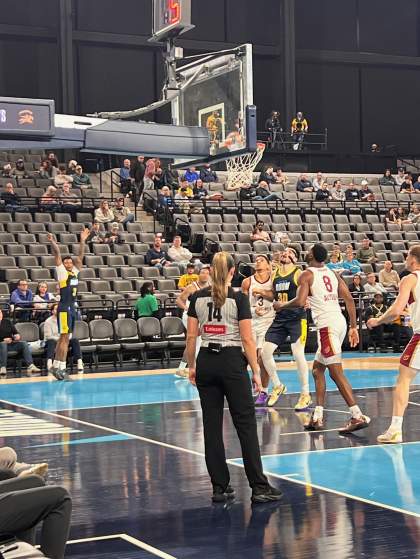
We sat in Row one, Section one, directly near the visiting team’s locker room entry. The proximity to the action was immersive and fun. You could hear sneakers on the court and feel the pace of play.
However, sitting slightly higher and closer to center court would provide excellent visibility while offering a bit more spatial buffer.
Courtside seats are extremely close to players and referees. That proximity can be thrilling but may feel overwhelming for those sensitive to personal space or constant movement.
Upper-level table-style seating provides additional flexibility and easier movement access. Comfy seating sections include sturdy chairs with cup holders — an underrated but valuable feature when balancing drinks and snacks.
Traffic flow should also factor into seat selection. Major walkways see constant movement. Navigating wide steps while music plays loudly and lights flash can feel overstimulating. Arriving early and settling in before the arena fills makes a noticeable difference.
Entertainment & Game Experience
Back to Top of ListThe entertainment extends well beyond the basketball itself.
The night we attended featured a local high school choir performing the national anthem, adding a meaningful community connection to the start of the evening. Timeout contests, halftime games and the energetic presence of Bobby the Bobcat kept the crowd engaged throughout.
Every Boom basket is followed by the announcer enthusiastically calling out “BOOM!” — a phrase that echoes repeatedly across the arena.
For those familiar with Indiana basketball history, that word carries deeper significance. The Boom name pays tribute to legendary Indiana Pacers coach Bobby “Slick” Leonard, whose iconic “Boom, baby!” call became a hallmark of the sport across the state. As a proud Gen X, I appreciated that nod to tradition.
It is important to note that the sound level is very high and constant throughout the game. Announcements can be difficult to understand because of the sustained volume. On the night we attended, the arena was not sold out and the lower crowd attendance may have amplified the acoustics. With fewer bodies absorbing sound, the noise seemed to bounce more than it might during a fuller game.
Planning for sustained high volume is essential. Noise-reducing headphones are advisable and knowing the sensory room is available offers reassurance.
The game itself was fast-paced and skillful, combining professional talent with community energy. Seeing an all-female officiating crew added an inspiring layer to the evening.
Exiting the Arena
Back to Top of ListEnding Calmly
We chose not to rush out immediately. Several players graciously stayed for photos and autographs, creating meaningful personal interactions.
A helpful departure tip: guests may exit through the first-floor garage access when leaving, even though that entrance is reserved for VIP entry during arrival. This allows families to remain covered and avoid weather exposure.
The exit was efficient, and we were on the road home before 9:30 p.m., ending the night calmly.
Final Thoughts
Back to Top of ListA Noblesville Boom game is loud, energetic and exciting — and it is also thoughtfully structured with inclusion in mind.
Clear signage, covered parking, flexible seating, a certified sensory room, and accessible support systems make it possible for neurodivergent individuals and families to participate fully.
Inclusion does not require lowering the energy of an event. It requires building intentional spaces within that energy so everyone can belong.
And on this night, that belonging was real.
Access creates opportunity. Inclusion creates belonging.